Launch offer — valid today only

📄 Digital book in PDF · read it on your phone or print it

UK Chainsaw, Felling and Tree Climbing Units in Drawings Every Check, Cut and Knot in the Same Order

For the UK chainsaw, felling, climbing, aerial rescue and cutting aloft units and their practical assessment. Pre-start checks, kickback, the sink and the hinge, hung-up trees, climbing knots, LOLER and the rescue plan: the drawing first, then what you need to remember. 70 illustrated pages.

START REVISING THIS WAY

🔒 Secure checkout · PDF by email · 30-day guarantee

Every topic, its own pageEach check and cut sequence drawn, with the explanation beside it
70 illustrated pages9 parts, from chainsaw PPE to assessment day revision
Up-to-date sourcesHSE INDG317, LOLER 1998, the Work at Height Regulations and the industry code of practice
PDF by emailFormat

Look Inside the Book

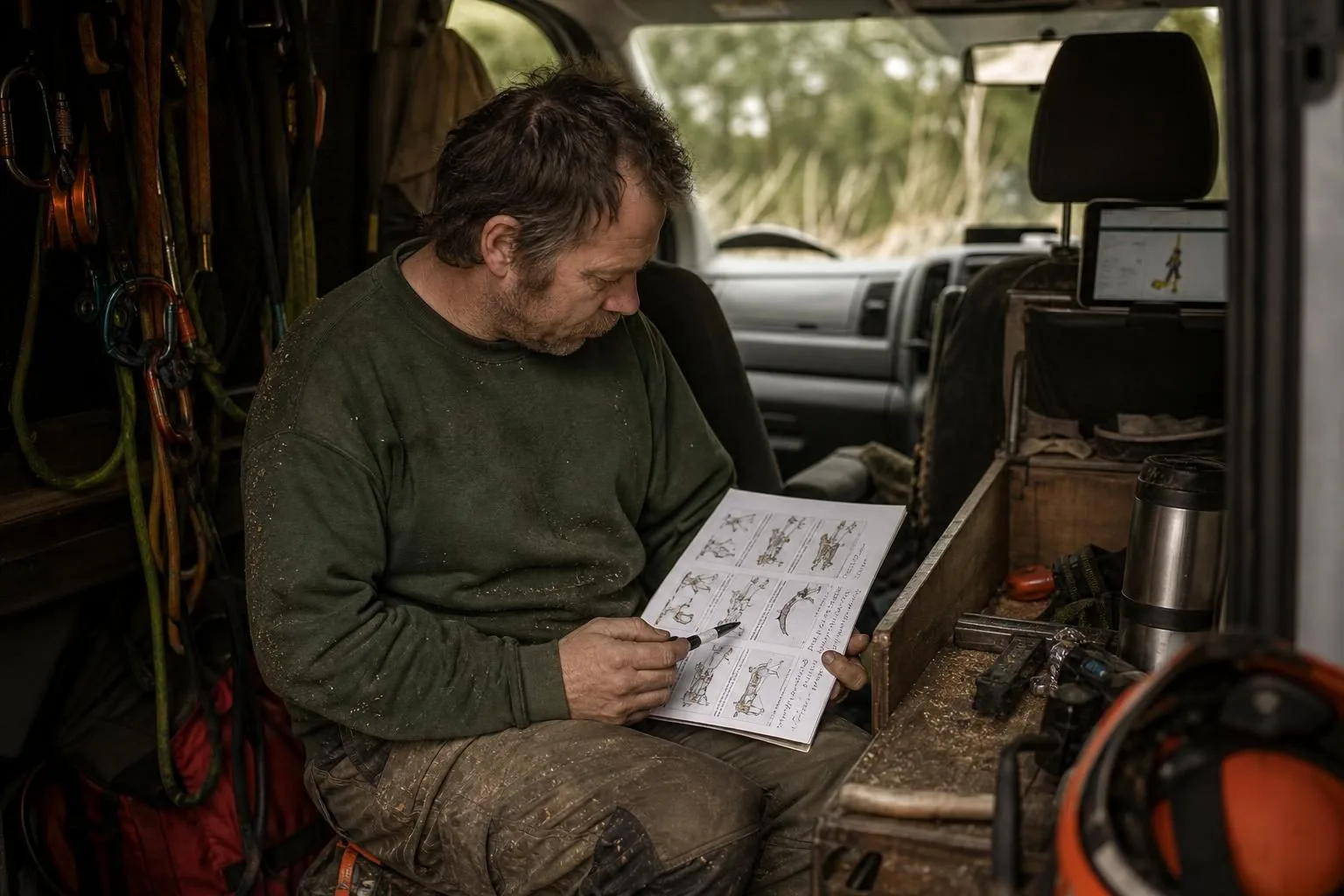
Every page has a large drawing and a box with the checks, angles and steps you need to know:

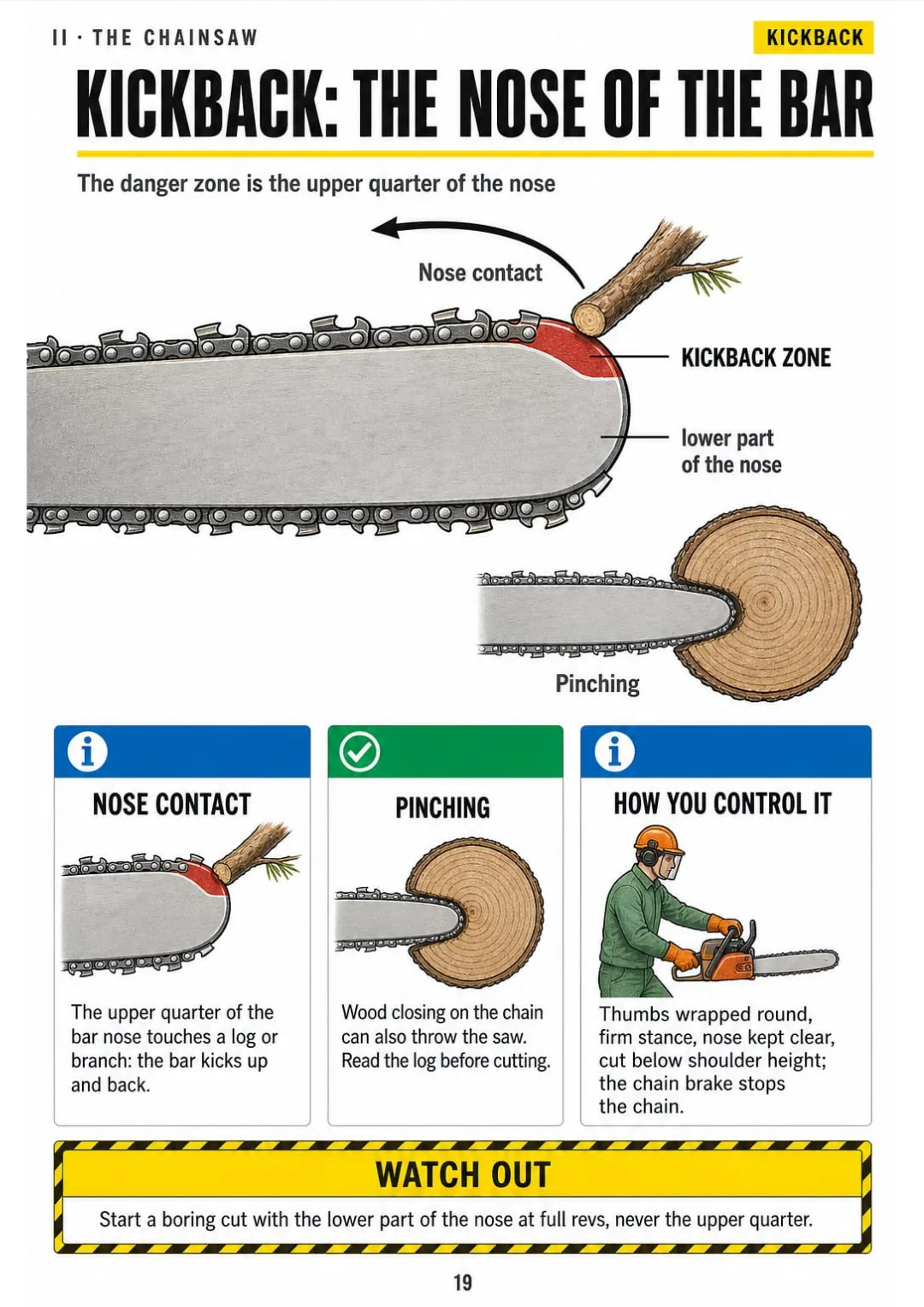
Kickback zone in red: nose contact, pinching and how to control it
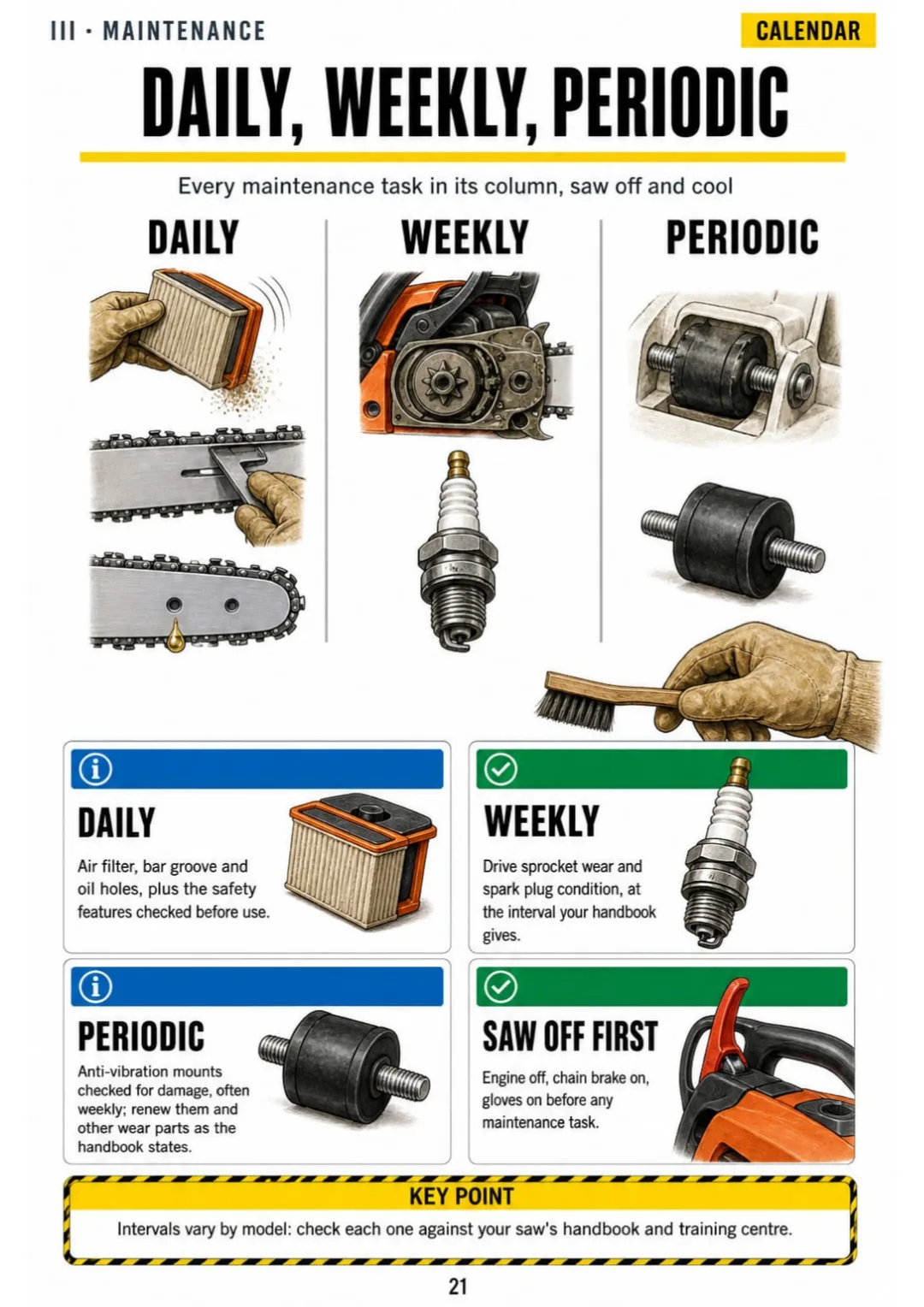
Air filter, bar groove, sprocket, plug and AV mounts, each in its column
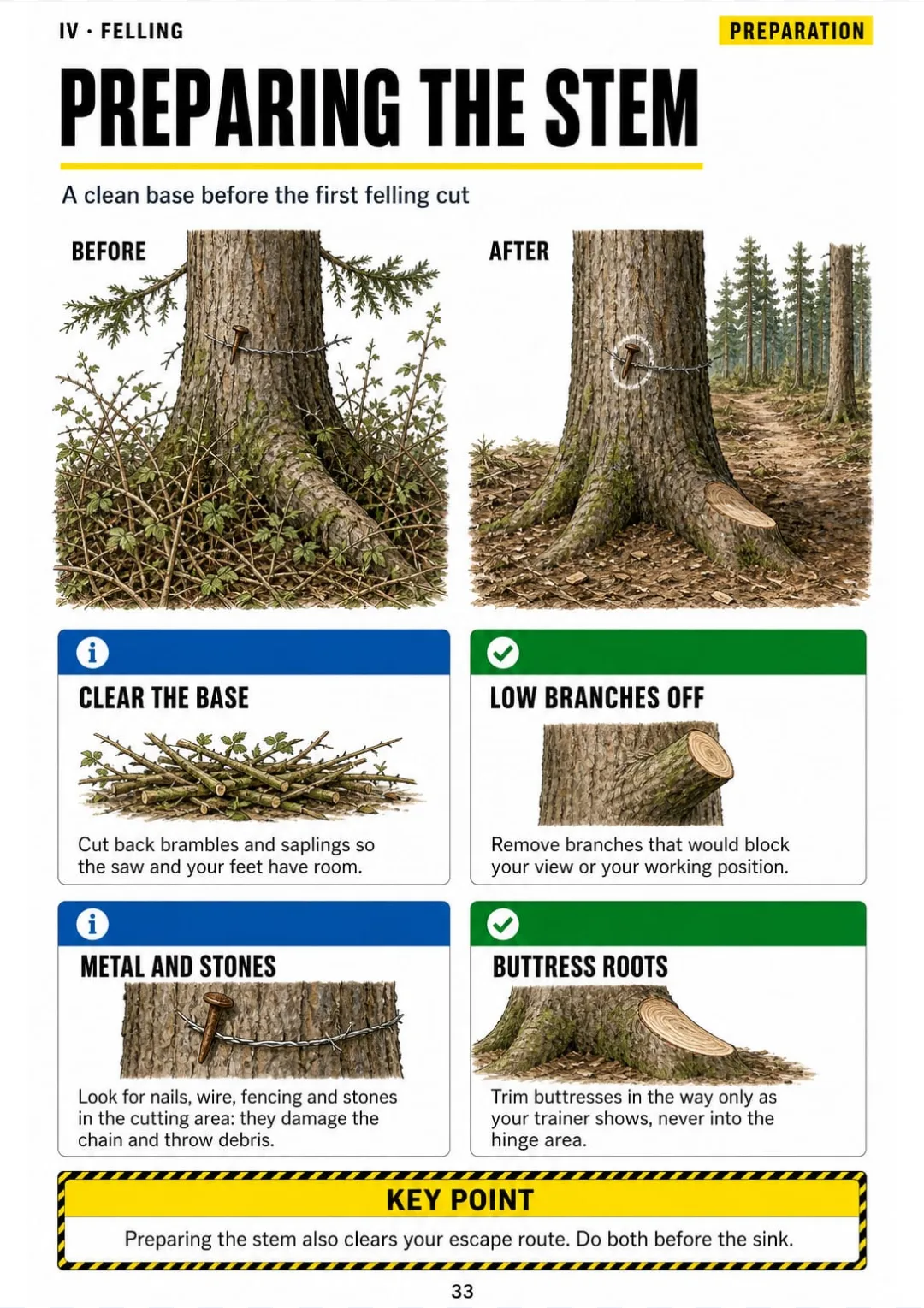
Base cleared, low branches off, metal checked: before and after.
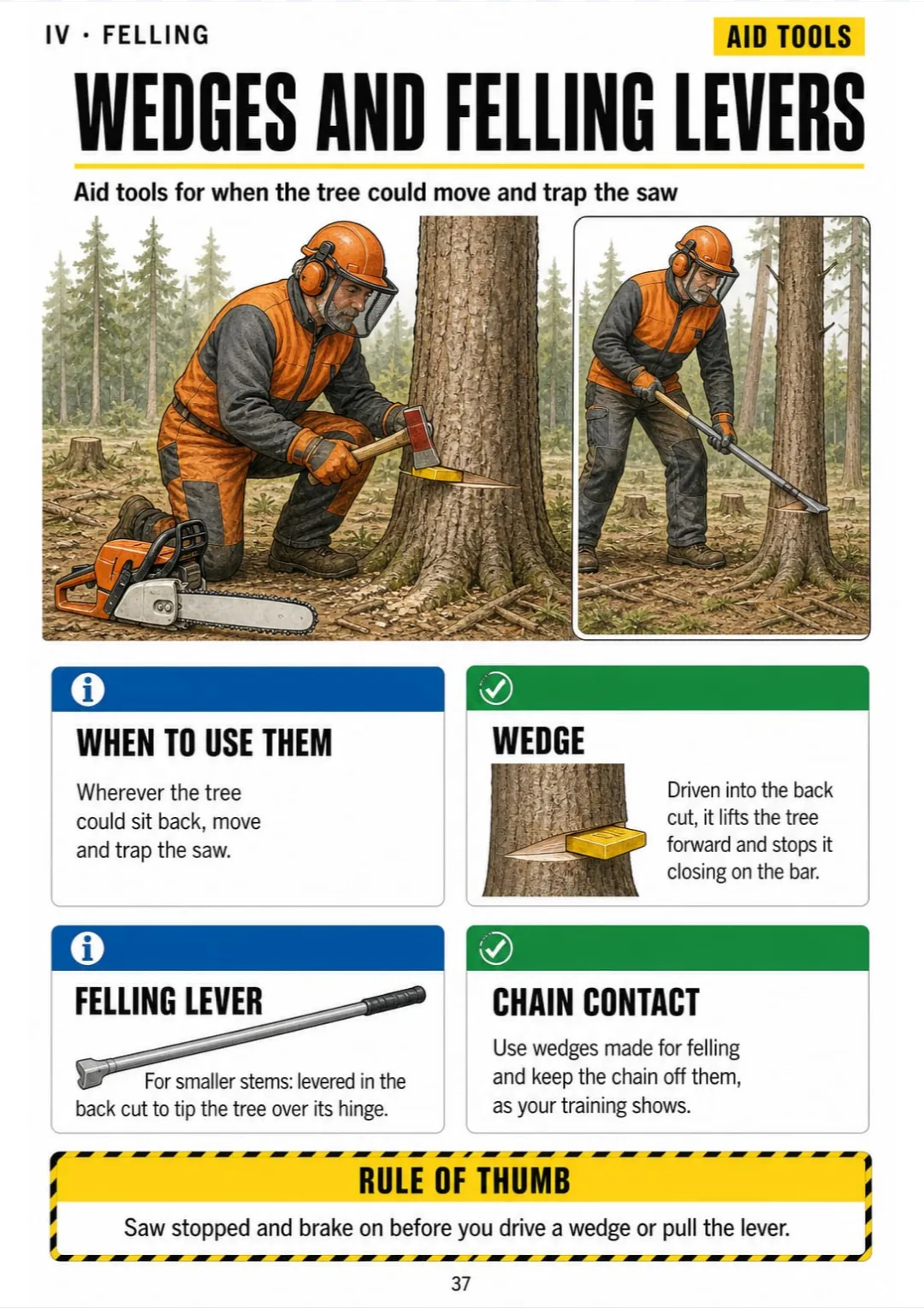
Wedge or felling lever wherever the tree could move and trap the saw.
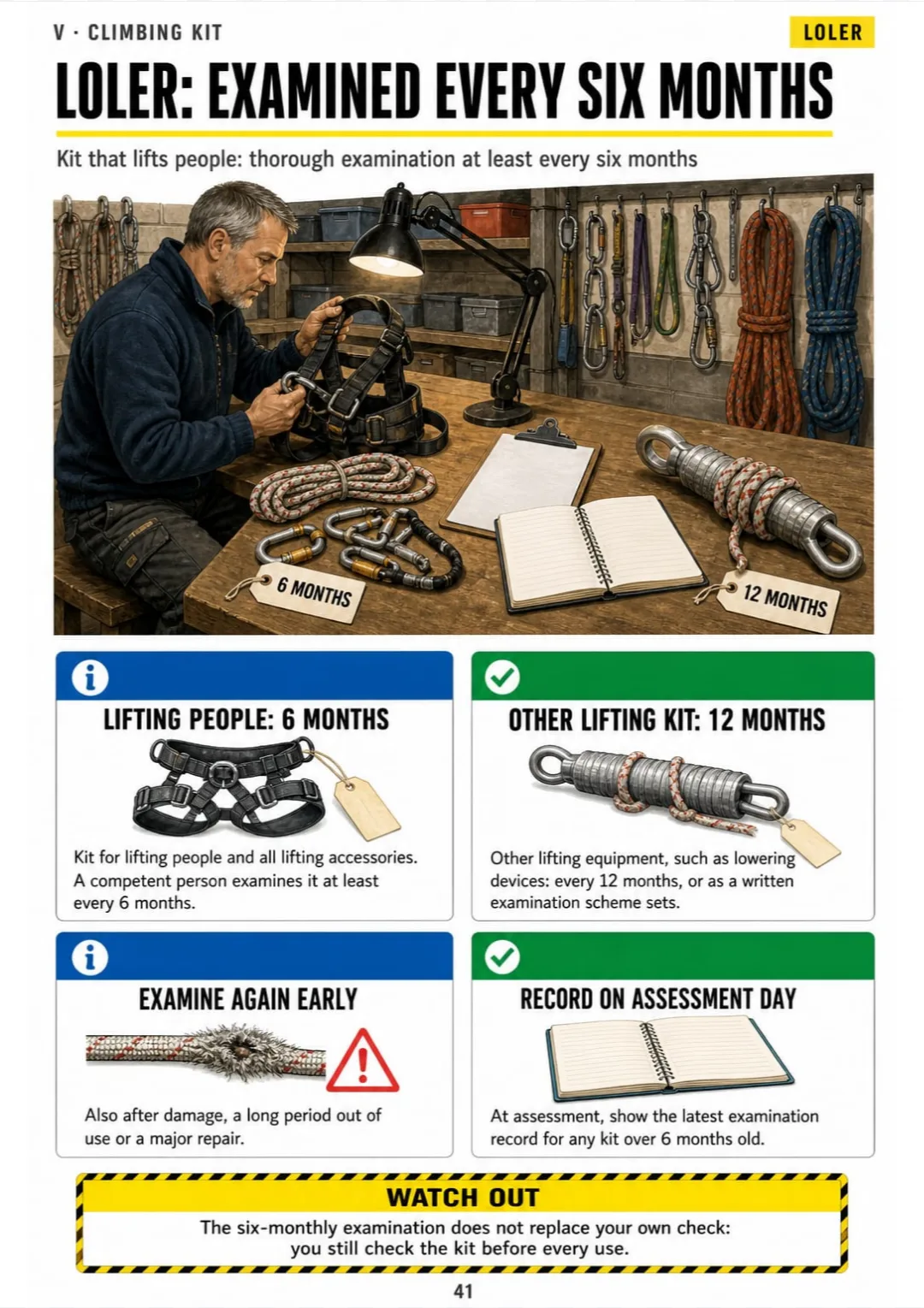
LOLER: 6 months for kit that lifts people, 12 for the rest or as the scheme sets
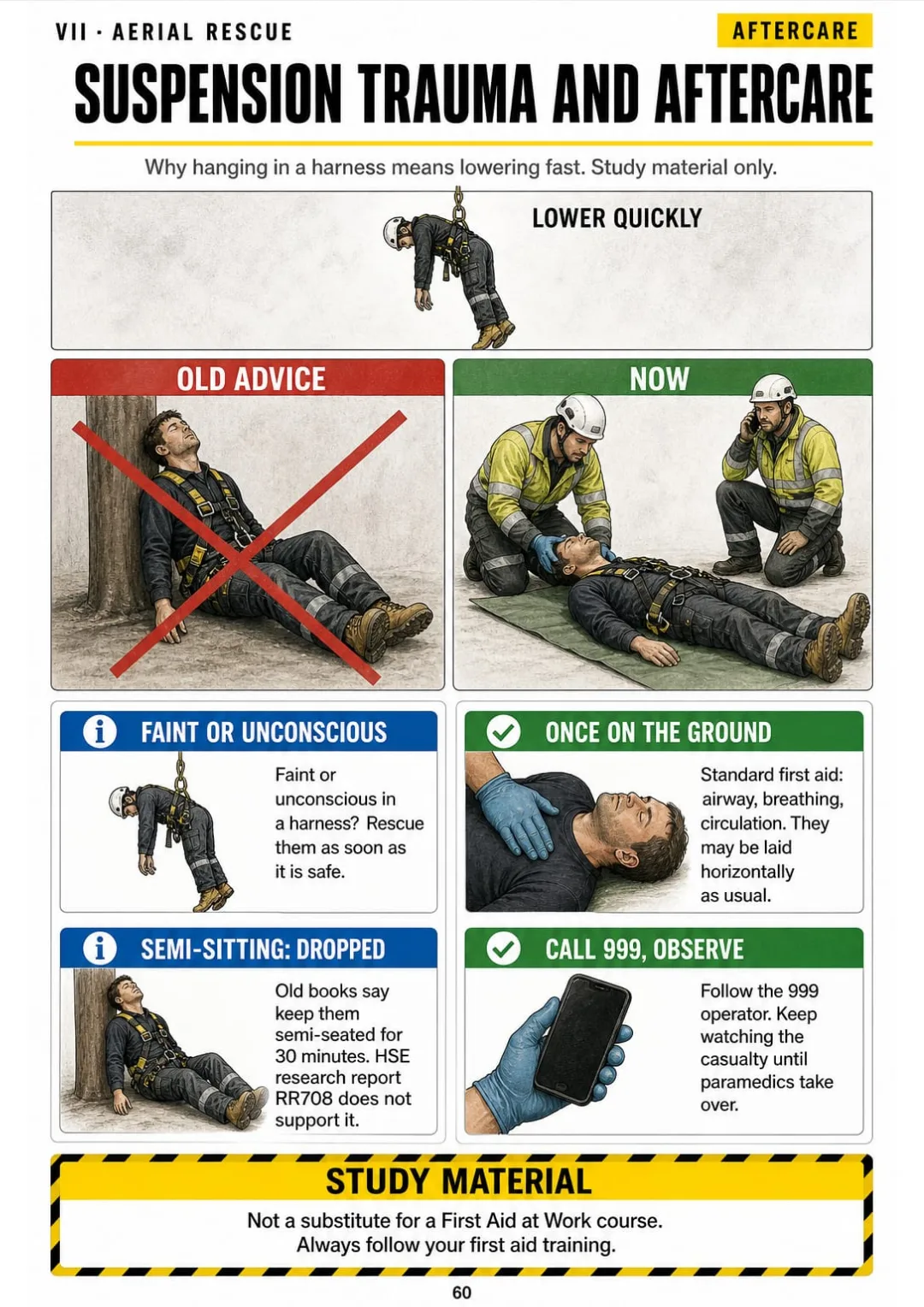
Old 30-minute semi-sitting advice is out (HSE RR708): lower quickly, standard first aid, 999.
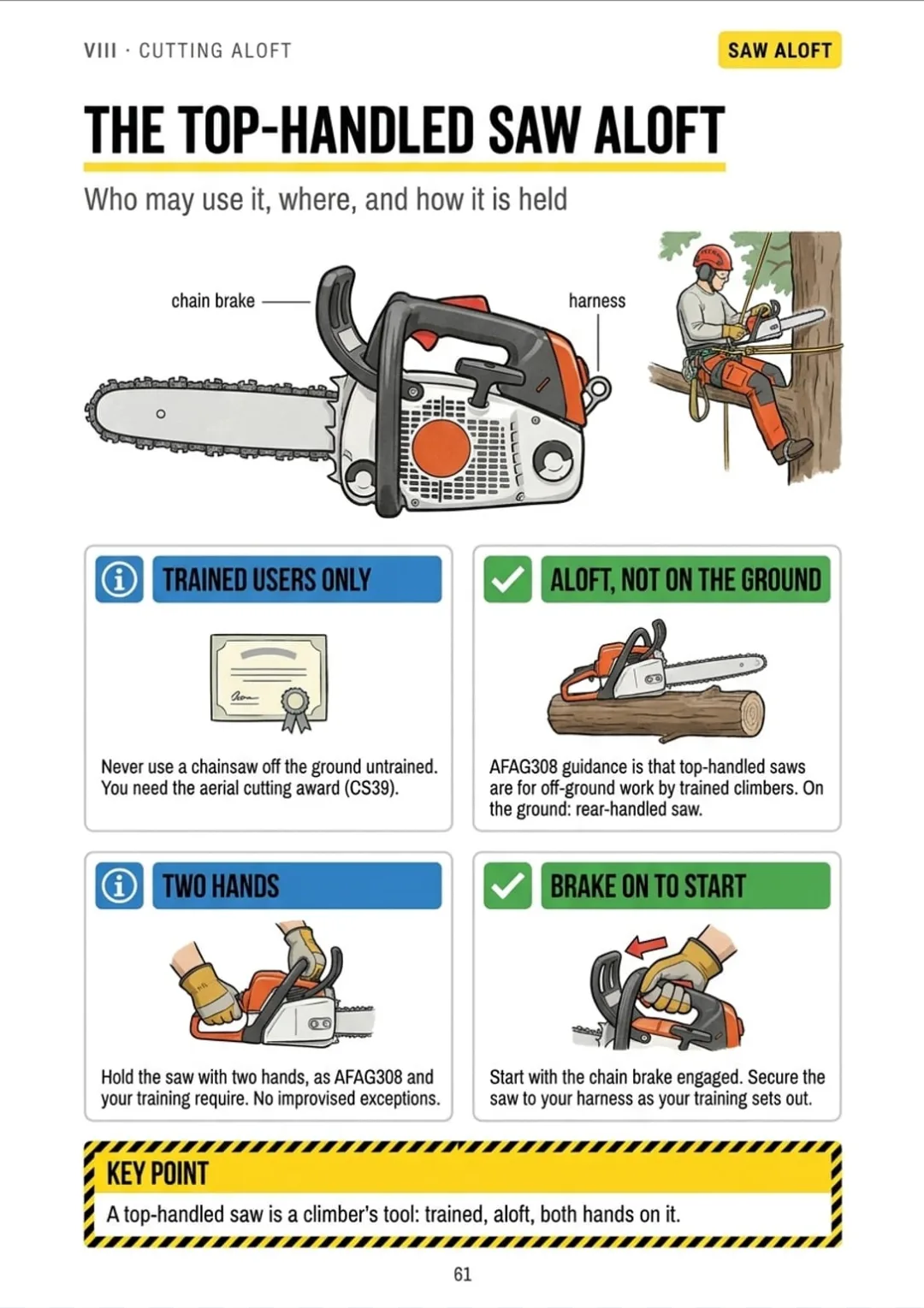
Top-handled saw: aloft only, 0039-23 training, two hands, chain brake on to start
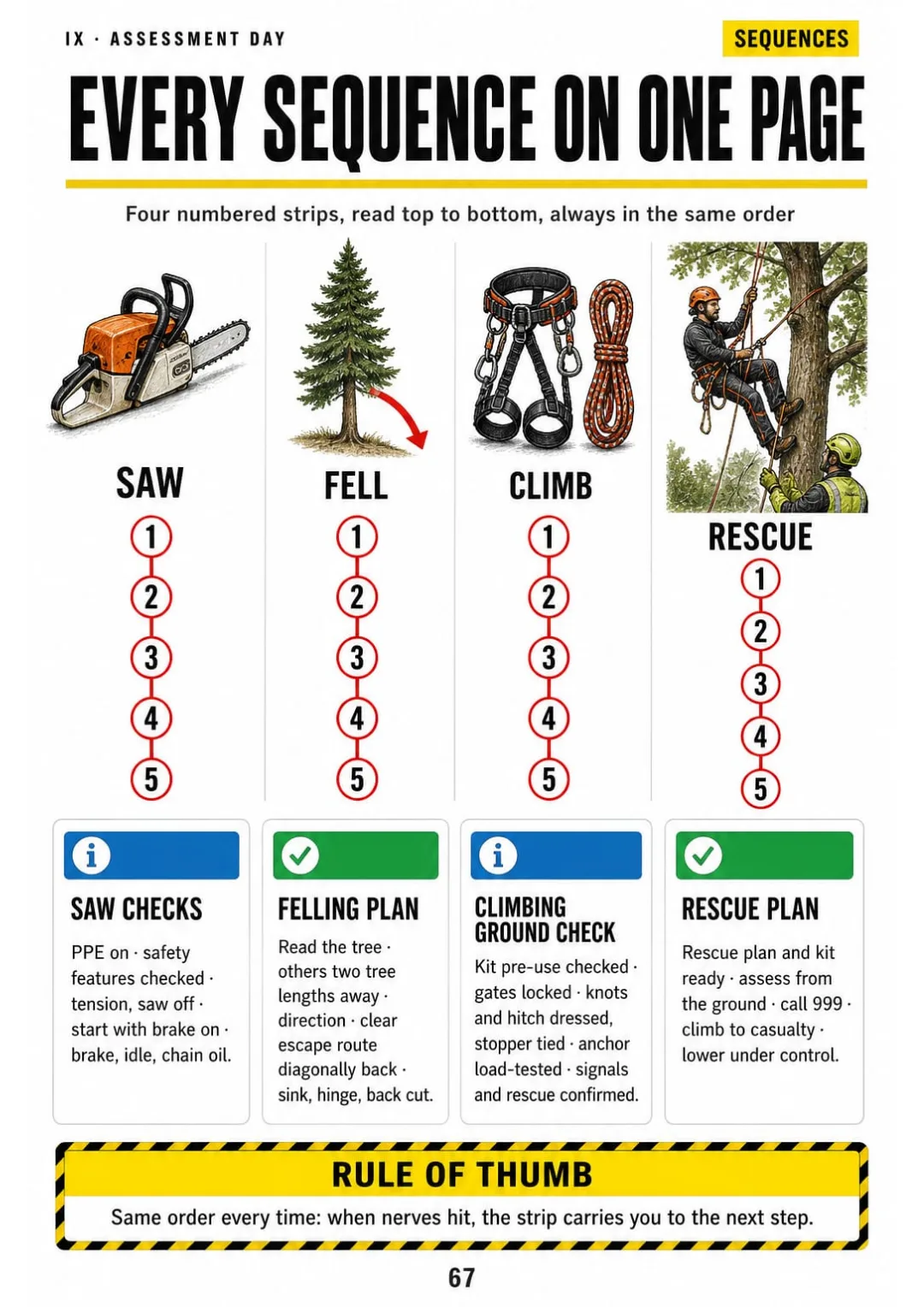
Four sequences in numbered strips: saw checks, felling plan, ground check, rescue plan.

Swipe to see more →

These are real pages from the book. The table of contents is the full one: 9 parts and 66 topics.

The Problem Isn't You. It's How It Was Explained.

You're at a small ash with the saw running and the assessor a few metres behind you. You start the sink and suddenly you're not sure how deep it should go.

The manual covers it in three paragraphs of small print: angles, proportions, the gob. The instructor showed it once, at speed. You read it at night, and by morning it's just words.

Base cleared, low branches off, metal checked: before and after.

In the book, the sink is one page: the opening of at least 45° drawn on the stem, the depth marked at a quarter to a third, and the two cuts meeting with no over-cut.

The same goes for the hinge, the back cut and the step, wedges and felling levers, the hung-up tree and the two-tree-length danger zone: each has its own page.

You look at the drawing, you understand it, and on the day you make the cuts in order without going back to the manual.

COMPARE FOR YOURSELF

The Same Topic, Two Ways to Study It

THIS
  • The manual: line after line of small print
  • Maintenance intervals explained only in words
  • You reach the assessment still unsure
Chainsaw maintenance shall be carried out at intervals determined by the manufacturer's instructions and the conditions of use. On a daily basis the operator should inspect and clean the air filter, remove debris from the guide bar groove and oil holes, check the chain brake and chain catcher, and confirm the security of all nuts and screws. At weekly intervals the drive sprocket should be examined for wear, the spark plug cleaned and gapped, and the anti-vibration mountings inspected for deterioration, with periodic servicing undertaken by a competent person.
FOR THIS
  • Each maintenance job in a drawing
  • Daily, weekly and periodic in their own columns
  • You see it and you understand it
Air filter, bar groove, sprocket, plug and AV mounts, each in its column
CONTENTS

Take a Look at the 9 Parts and 66 Topics

Before the saw starts, the chainsaw and its safety checks, maintenance and cross-cutting, felling small trees, climbing kit and knots, climbing the tree, aerial rescue, cutting aloft and assessment day revision: 70 pages, all illustrated.

IBefore the Saw Starts · pp. 5-11
  1. The Four Skills and How They Connect
  2. The Rules Behind Every Job
  3. Chainsaw PPE from Helmet to Boots
  4. Leg Protection: Type and Class
  5. The Site Risk Assessment in Five Boxes
  6. Working Alone and the Emergency Plan
  7. First Aid Kit and Bleeding Control
IIThe Chainsaw: Parts and Safety Checks · pp. 12-20
  1. The Saw Labelled Part by Part
  2. The Seven Safety Features
  3. Pre-Start Checks, Saw Off and Supported
  4. Chain Tension: Cold, Warm and the Lift Test
  5. Fuelling Safely
  6. Two Ways to Start the Saw
  7. Running Checks After Starting
  8. Kickback: The Upper Quarter of the Nose
  9. Stance, Grip and Body Position
IIIMaintenance and Cross-Cutting · pp. 21-28
  1. Daily, Weekly and Periodic Maintenance
  2. The Cutter Tooth Explained
  3. Sharpening the Chain Step by Step
  4. Bar Care and Sprocket Wear
  5. Tension and Compression in a Log
  6. Cross-Cutting a Log on the Ground
  7. Cross-Cutting Under Tension
  8. Stacking and Working Area
IVFelling Small Trees · pp. 29-39
  1. Reading the Tree Before You Cut
  2. The Danger Zone: Two Tree Lengths
  3. Choosing the Felling Direction
  4. Escape Routes at 45 Degrees
  5. Preparing the Stem
  6. The Sink: Gob Depth and Angle
  7. The Hinge: About a Tenth of the Diameter
  8. The Back Cut and the Step
  9. Wedges and Felling Levers
  10. Dealing with a Hung-Up Tree
  11. Snedding and Logging Up
VClimbing Kit and Knots · pp. 40-48
  1. The Climbing Kit Laid Out
  2. LOLER: Thorough Examination Every Six Months
  3. Pre-Use Check of Rope and Harness
  4. Karabiners: Gate, Load and Lock
  5. The Figure of Eight Stopper
  6. The Friction Hitch, Stage by Stage
  7. Anchor Knots and the Running Bowline
  8. Moving Rope and Stationary Rope Systems
  9. Throw Line and Installing the Rope
VIClimbing the Tree · pp. 49-54
  1. Choosing and Testing the Anchor
  2. The Ground Check Before Leaving the Ground
  3. Ascending Step by Step
  4. Two Points of Attachment
  5. Moving Through the Crown
  6. Descending Under Control
VIIAerial Rescue · pp. 55-60
  1. The Rescue Plan Before Anyone Climbs
  2. Assess From the Ground
  3. Getting Up to the Casualty
  4. Transferring the Casualty to Your System
  5. Lowering the Casualty
  6. Suspension Trauma and Aftercare
VIIICutting Aloft · pp. 61-65
  1. The Top-Handled Saw Aloft
  2. Positioning Before the Cut
  3. Removing a Branch in Sections
  4. Signals and the Drop Zone
  5. Pruning Cuts That Seal Over
IXAssessment Day Revision · pp. 66-70
  1. What the Assessor Watches
  2. Every Sequence on One Page
  3. The Most Frequent Mistakes in the Practical
  4. Questions You Are Often Asked
  5. The Night Before: Kit and Paperwork

One Page, One Topic, All Clear

Think of it this way:

It's the morning of your felling assessment. A tree hangs up in the canopy and the assessor asks what you won't do next. You need the answer there and then, not after another video.

In the book you open the hung-up tree page and see the five banned moves, each one drawn, and the exclusion zone if the tree can't come down.

LOLER: 6 months for kit that lifts people, 12 for the rest or as the scheme sets

The same with kickback at the nose of the bar, the sink and the hinge, the LOLER examination intervals, the friction hitch and the rescue plan: each one on its own page.

Tree Surgery Illustrated is 9 parts and 66 topics, all drawn, and it ends with an assessment day part: every sequence on one page, the most frequent mistakes and the questions you're often asked.

What you see drawn, you don't have to memorize.

What's Inside Tree Surgery Illustrated:

Ipp. 5-11

Before the Saw Starts

The four skills and how they link, the rules behind every job, chainsaw PPE and leg protection, the site risk assessment, working alone and the first aid kit.

IIpp. 12-20

The Chainsaw: Parts and Safety Checks

The saw part by part, its seven safety features, pre-start checks with the saw off, chain tension, fuelling, starting, running checks, kickback and stance.

IIIpp. 21-28

Maintenance and Cross-Cutting

Daily, weekly and periodic maintenance, the cutter tooth, sharpening the chain, bar and sprocket wear, tension and compression, cross-cutting and stacking.

IVpp. 29-39

Felling Small Trees

Reading the tree, the two-tree-length danger zone, felling direction, escape routes, the sink, the hinge, the back cut, wedges, hung-up trees and snedding.

Vpp. 40-48

Climbing Kit and Knots

The climbing kit laid out, LOLER examinations, pre-use checks, karabiners, the figure of eight, the friction hitch, anchor knots, rope systems and the throw line.

VIpp. 49-54

Climbing the Tree

Choosing and testing the anchor, the ground check, ascending, two points of attachment, moving through the crown and descending under control.

VIIpp. 55-60

Aerial Rescue

The rescue plan, assessing from the ground, reaching the casualty, transferring them to your system, lowering, and suspension trauma and aftercare.

VIIIpp. 61-65

Cutting Aloft

The top-handled saw aloft, positioning before the cut, removing a branch in sections, signals and the drop zone, and pruning cuts.

IXpp. 66-70

Assessment Day Revision

What the assessor watches, every sequence on one page, the most frequent mistakes, the questions you're often asked and the night-before kit list.

At the end of the book: Every sequence on one page, the most frequent mistakes in the practical and a kit and paperwork list for the night before.

Plus: 2 Free Books

Tree Surgery Practice Questions with Answers

BONUS 1: «Tree Surgery Practice Questions with Answers»

Value on its own: US$ 17.90

Assessment-style questions on the saw, felling, climbing and rescue, with the answer explained, so you find the gaps before the assessor does.

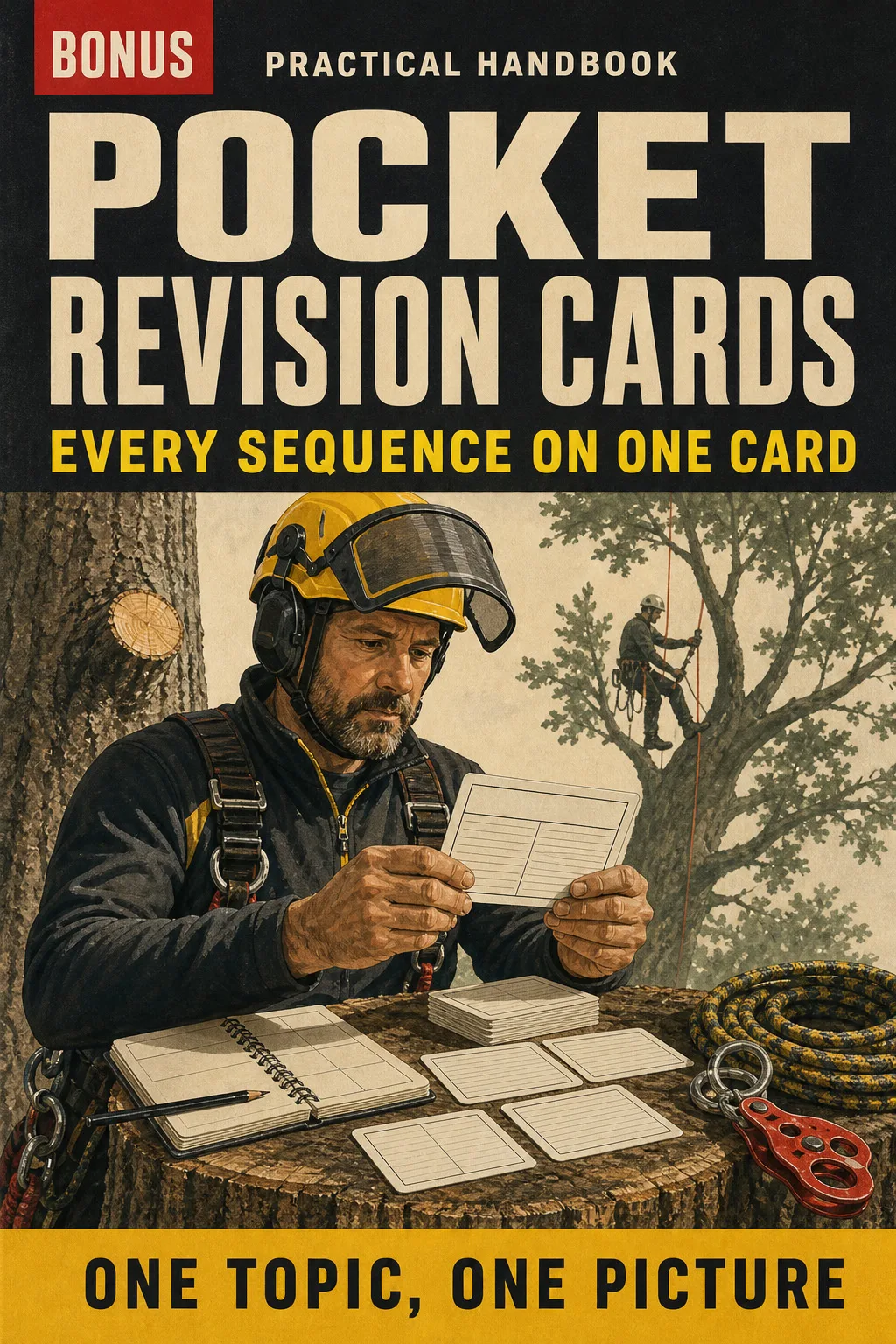
Pocket Revision Cards: Every Sequence on One Card

BONUS 2: «Pocket Revision Cards: Every Sequence on One Card»

Value on its own: US$ 14.90

Each check, cut sequence and knot reduced to one printable card you can read in the van the morning of your assessment.

Tree Surgery Illustrated with 2 Free Books

  • Tree Surgery Illustrated: 70 illustrated pagesUS$ 63
  • BONUS 1: Tree Surgery Practice Questions with AnswersUS$ 17.90
  • BONUS 2: Pocket Revision Cards: Every Sequence on One CardUS$ 14.90
  • High-resolution PDF to printIncluded
Total value US$ 95.80
YOUR PRICE:
US$ 27
You save US$ 68.80
YES, I WANT TREE SURGERY ILLUSTRATED FOR US$ 27

📄 This is a digital PDF book sent to your email: nothing is printed or shipped.

Secure purchaseEncrypted payment30-day guarantee

PDF by email: We email you Tree Surgery Illustrated as a PDF, together with the two free books. It's a single payment: no installments, no extra charges.

Who This Book Is For

You're on the course

You're on the course

The instructor shows it once; the book shows it again, one page per sequence, so each evening you go over the day in the same order.

Your assessment is close

The night before, you run through every sequence on one page and the practice questions, and you know which check comes next.

You already work on trees

Printed and kept in the van, it's the page you check when you're unsure of a maintenance job or when your climbing kit is due its examination.

Everything You Get Today

US$ 95.80US$ 27
YES, I WANT TREE SURGERY ILLUSTRATED FOR US$ 27

📄 This is a digital PDF book sent to your email: nothing is printed or shipped.

30DAYS
GUARANTEE

30-Day Guarantee

Try Tree Surgery Illustrated for 30 days, bonus books included.

We refund everything if the file won't open, if the book isn't what you see here, if you were charged twice or if the email doesn't arrive. Just email us.

You pay once. No subscriptions.

Frequently Asked Questions

Is it for me if I've used a chainsaw for years and I'm now booked on the course?

Yes. It isn't a beginner's book: it puts every check, cut and knot in a fixed order for the UK chainsaw, felling, tree climbing, aerial rescue and cutting aloft units (such as CS30, CS31, CS38 and CS39), so you revise what the assessor watches.

Where does the content come from?

From UK guidance and law: HSE's Chainsaws at work (INDG317), the Work at Height Regulations 2005, PUWER 1998, LOLER 1998 and the Arboricultural Association's Industry Code of Practice. Intervals and settings are flagged to check against your saw's handbook and your training centre.

Is it official material?

No. It's independent study material, not produced by or affiliated with HSE, the Arboricultural Association, City & Guilds, NPTC or Lantra. It doesn't give you a certificate: that comes from the awarding body once you pass the practical assessment with your training centre.

Does it replace the course?

No. The course, the practical assessment, first aid training and the manufacturer's instructions come first. The book is for revising what you learn there, before and after the assessment.

Are the practice questions the ones in the assessment?

No. They're written for this book, on the saw, felling, climbing and rescue, and they aren't official questions from any assessment.

When and how does it arrive?

As a PDF by email, together with the 2 bonus books, to the address you enter at checkout.

Do I have to pay every month?

No. It's a one-off payment.

Can I have it on paper?

Yes. The PDF prints at home or at a print shop, so you can keep the pages you need in the van.

How does the refund work?

You have 30 days. We refund everything if the file won't open, if the book isn't what you see on this page, if you were charged twice or if the email doesn't arrive: just email us.

Before You Close This Page

No more rereading without anything sticking.

The sink, the hinge and the back cut: you see them drawn, and that's it.

You arrive at your assessment knowing where everything is.

Drawings make studying faster.

The book is right below.

One-time payment: US$ 27 · Guarantee: 30 days · PDF by email

YES, I WANT TREE SURGERY ILLUSTRATED FOR US$ 27

📄 This is a digital PDF book sent to your email: nothing is printed or shipped.